
Embryo freezing in IVF: vitrification, storage and frozen transfer
Embryo freezing in IVF: the short answer
Embryo freezing, also called embryo cryopreservation, stores suitable embryos at very low temperatures for possible use in a later treatment cycle. It can allow a frozen embryo transfer without repeating ovarian stimulation and egg retrieval for every transfer. The decision is part of the treatment plan, not a promise of a particular outcome.
Modern laboratories mainly use vitrification, a rapid-cooling method. It is designed to limit damaging ice-crystal formation, but not every embryo survives warming and a surviving embryo may not implant. The HFEA explanation of embryo freezing and the ASRM guidance on rapid-cooling vitrification describe these limits clearly.
When might embryos be frozen?
Embryos may be cryopreserved when there are suitable embryos remaining after a transfer, when a fresh transfer is postponed for safety or timing reasons, or when a later transfer is part of the plan. If preimplantation genetic testing is being considered, the embryo usually needs to be biopsied and cryopreserved while the laboratory waits for the result.
Freezing is not automatically required in every IVF cycle. The team may consider ovarian response, hormone levels, the uterine lining, embryo development, genetic testing, previous treatment and the practical plan for follow-up.
The aim is not to collect embryos for its own sake. It is to make the next clinical step safer and clearer when a later transfer is the more suitable option.
Which embryos can be frozen?
Not every embryo is suitable for cryopreservation. Laboratories assess development and appearance, and the threshold can vary by stage and local protocol. Embryos may be frozen at different developmental stages, including the blastocyst stage, which is usually reached after several days of culture.
An embryo grade describes features seen under the microscope. It is useful laboratory information, not a guarantee of implantation, pregnancy or live birth. Ask the embryology team to explain what the grade means in your report and what remains uncertain.
How does vitrification work?
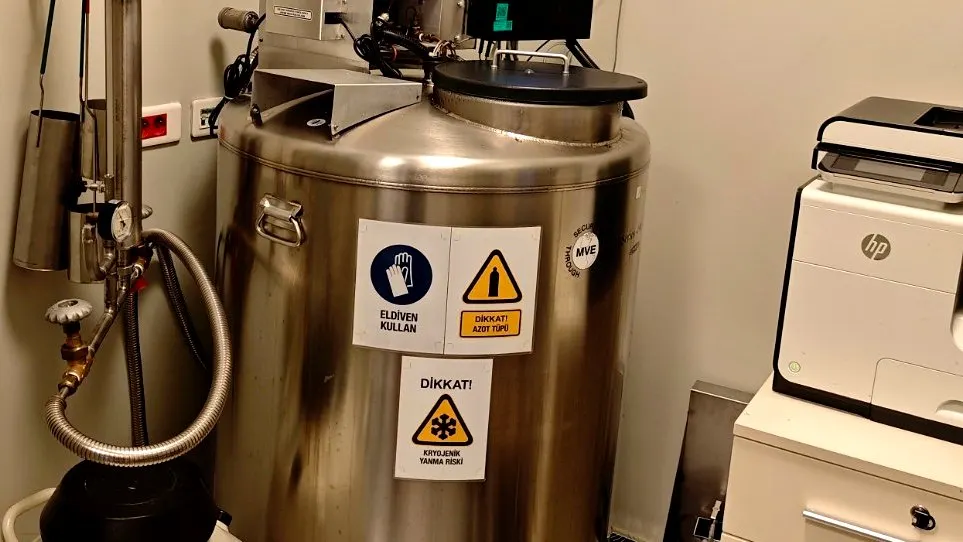
The laboratory exposes the embryo to carefully controlled cryoprotectant solutions. These solutions help reduce the amount of water inside the cells before rapid cooling. The embryo is then stored in liquid nitrogen at about -196°C.
ASRM describes rapid-cooling vitrification as a standard approach for cryopreserving human oocytes and embryos. Consistent results depend on the protocol, equipment, operator training and quality-control system. That is why a laboratory’s process matters as much as the name of the technique.
When an embryo is needed, the laboratory performs a controlled warming procedure. “Warming” is the more precise laboratory term than simply saying “thawing.” The embryology team checks the embryo after warming and confirms whether it is suitable for the planned transfer.
What happens in a frozen embryo transfer?
A frozen embryo transfer (FET) uses an embryo stored from an earlier cycle. It does not include a new egg retrieval in that transfer cycle. The uterine lining still needs to be prepared and monitored so that the timing of progesterone exposure and embryo development is coordinated.
The preparation depends partly on ovulation:
- With regular ovulation, a natural or modified-natural cycle may be considered. Ultrasound and, when needed, urine or blood tests help the team identify the appropriate timing.
- With irregular or absent ovulation, medicines may be used to prepare the lining and organise the timing of transfer.
- Your clinic may use another protocol based on your medical history, previous treatment and local practice.
The HFEA patient information on using frozen embryos explains why the exact process differs between patients. Follow the written plan from your own clinic rather than changing medicines or timing based on a general online description.
Fresh or frozen transfer: is one better?
There is no universal rule that a fresh transfer or a frozen transfer is better for everyone. A frozen plan may be useful when the lining, hormone levels or ovarian response make it sensible to separate stimulation from transfer. In other situations, a fresh transfer may remain reasonable.
Published results are easy to misread when the patient group, embryo stage, genetic status, outcome measure and denominator differ. A pregnancy rate per transfer is not the same as a live-birth rate per started cycle. A clinic should explain which outcome it is reporting and how it relates to your own plan.
Dr. Aksoy’s approach
I do not treat the words “fresh” and “frozen” as a ranking system. Before recommending a plan, I want the reason for the timing to be clear: Is the lining ready? Is the embryo plan known? Would waiting improve safety or make follow-up more manageable? The label matters less than the clinical question it is answering.
Storage, consent and planning in Turkey
Under the Turkish assisted-reproduction regulation, samples may generally be stored in a centre for up to five years. Storage beyond five years requires permission from the Ministry of Health. The same regulation says that, when storage continues beyond one year, the couple must submit a signed written request each year to confirm that storage should continue.
These are legal and administrative rules, not a substitute for the consent documents from your clinic. Before travelling or making a long-term plan, ask for the storage period, annual confirmation process, consent conditions, fees and what happens if circumstances change in writing. Regulations can change, so the current clinic and Ministry requirements should be checked for your case.
What are the limits and risks?
Not every embryo survives warming. There can also be rare technical problems involving equipment, handling or identification, which is why laboratories need written procedures, traceability and independent checks. These safeguards reduce risk; they do not make it zero.
Embryo freezing also does not remove the biological factors that affect treatment. The age at egg collection, embryo development, sperm and egg factors, the uterine environment and the timing of transfer all remain relevant. A frozen embryo is an opportunity for a later plan, not a stored outcome.
Frequently asked questions
What is embryo freezing?
Embryo freezing, or cryopreservation, stores suitable embryos at very low temperatures so they may be considered for a later treatment cycle. It can avoid repeating ovarian stimulation and egg retrieval for every transfer, but it does not guarantee a pregnancy.
Which embryos can be frozen?
Not every embryo is suitable for cryopreservation. The laboratory considers the embryo’s developmental stage and appearance. Embryos may be frozen at different stages, including the blastocyst stage.
Does vitrification guarantee pregnancy?
No. Vitrification is designed to protect the embryo during rapid cooling and warming, but not every embryo survives warming and a surviving embryo may not implant.
How is a frozen embryo transfer prepared?
If ovulation is regular, a natural or modified-natural cycle may be considered. If cycles are irregular or absent, medicines may be used to prepare the uterine lining. The plan depends on your history, monitoring and clinic protocol.
How long can embryos be stored in Turkey?
The Turkish regulation states that samples may generally be stored in centres for up to five years. Storage beyond five years requires Ministry permission, and continued storage beyond one year must be confirmed in writing each year. Ask the clinic to confirm the current paperwork for your case.
Important information
This page is for general education and does not replace an assessment or the written instructions from your fertility team. Embryo selection, cryopreservation, storage, warming and transfer decisions vary between patients and laboratories. Ask your own team to explain the reason for the plan, the consent conditions and what information you should expect next.
Sources
- HFEA: Embryo freezing
- ASRM: A review of best practices of rapid-cooling vitrification for oocytes and embryos
- ASRM: Comprehensive guidance for human embryology, andrology and endocrinology laboratories
- Republic of Türkiye Ministry of Health: Assisted reproduction regulation
Add as a Preferred Source on Google
You can add draksoyivf.com as one of your preferred health information sources on Google.