
IVF fertilisation and ICSI: what happens in the laboratory
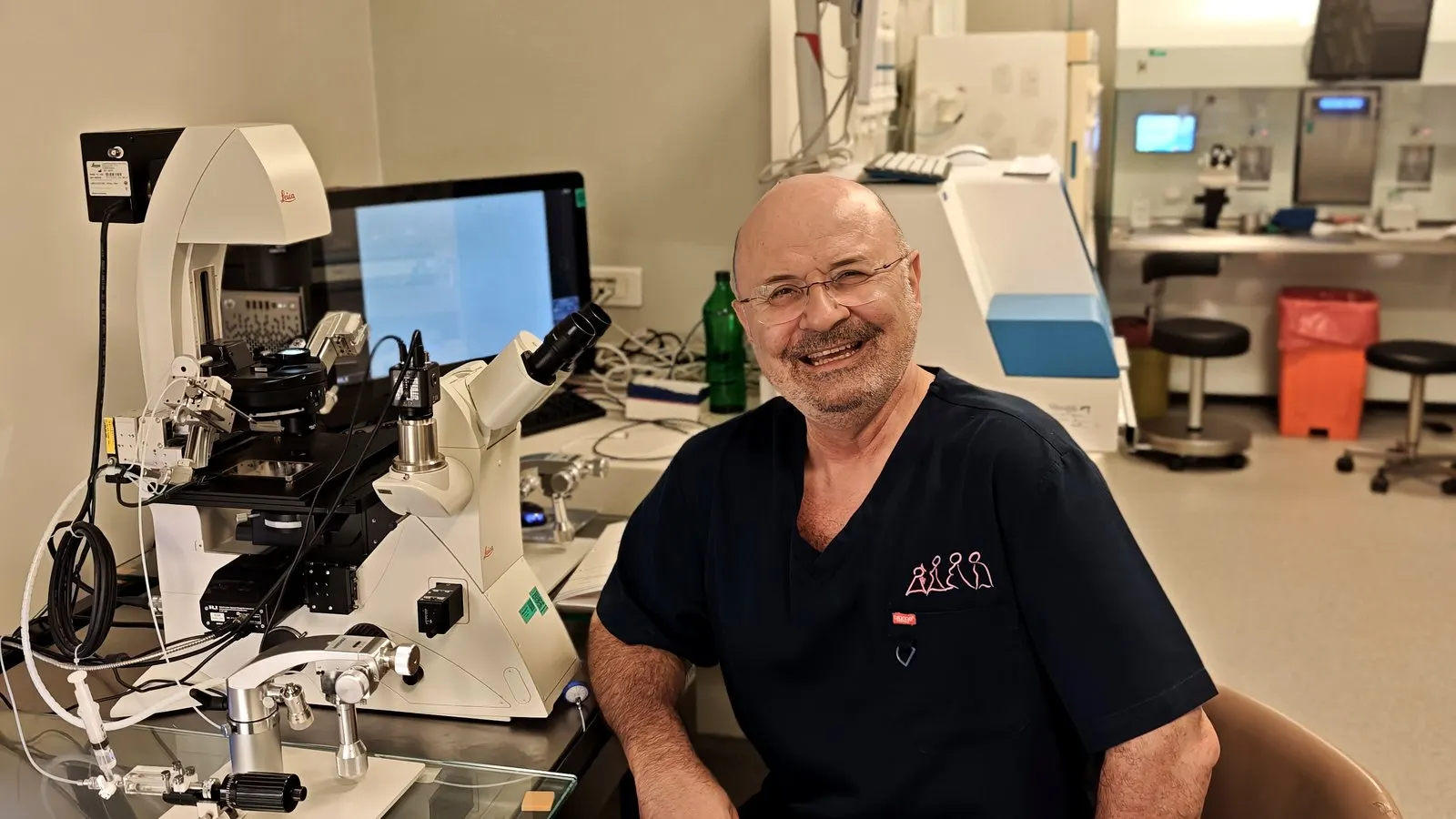
IVF fertilisation and ICSI: the short answer
After the eggs have been collected, the embryology laboratory prepares the eggs and sperm and decides how fertilisation will be attempted. With conventional IVF, prepared sperm are placed around an egg in a culture dish. With ICSI, a trained embryologist injects one sperm into the egg.
ICSI is not an automatic upgrade to IVF. It may be considered when semen parameters are abnormal, sperm have been retrieved surgically, frozen-thawed oocytes are being used, or a previous IVF cycle resulted in failed or very low fertilisation. The current NICE guidance on ICSI also advises against using ICSI for non-male-factor fertility problems when semen parameters are normal.
The eggs and sperm are not the only part of this stage. The laboratory also checks identity, records each key manipulation and monitors embryo development before the plan for transfer or freezing is confirmed.
At a glance
| Stage | What usually happens | What you can ask |
|---|---|---|
| Fertilisation plan | The team reviews the semen findings, previous fertilisation history, the source of the sperm or oocytes and the laboratory protocol. | Why is conventional IVF or ICSI being considered for this cycle? |
| Insemination | Sperm are placed around the egg for conventional IVF, or one sperm is injected into the egg for ICSI. | When will the laboratory check and report fertilisation? |
| Fertilisation check | The laboratory records whether fertilisation occurred and follows its defined timing and documentation procedure. | What will the update include, and who will contact us? |
| Embryo culture | Fertilised eggs are monitored as they develop in controlled laboratory conditions. | Will the plan be transfer, freezing or a decision after the culture period? |
The exact workflow differs between laboratories. Your written treatment plan and the explanation from your own team should take priority over a general online description.
What is conventional IVF fertilisation?
For conventional IVF, the laboratory places prepared sperm around a mature egg in a culture dish. The sperm must reach and enter the egg without being injected directly. This is the approach often used when the semen findings are suitable for conventional insemination.
The phrase “natural fertilisation” can be misleading here. The contact takes place outside the body, under laboratory conditions, and the embryology team controls the preparation, timing and observation. It is better described as conventional IVF fertilisation rather than a copy of what happens inside the reproductive tract. The HFEA explanation of IVF describes the main steps in patient-friendly language.
Blocked tubes, endometriosis or ovulation problems may be reasons to consider IVF, but they do not by themselves decide between conventional IVF and ICSI. That decision is usually linked more closely to the semen findings, previous fertilisation results, the oocytes being used and the laboratory’s clinical criteria.
When may ICSI be considered?
ICSI involves selecting one sperm and injecting it into the cytoplasm of a mature egg under a microscope. NICE recommends offering or considering ICSI in situations such as:
- surgically retrieved sperm or frozen-thawed oocytes;
- abnormal semen parameters, taking their severity into account; or
- a previous IVF cycle with failed fertilisation or a very low fertilisation rate.
The NICE recommendations are not a promise that ICSI will produce an embryo or a pregnancy. The procedure changes how sperm and egg are brought together; it cannot correct every problem affecting egg maturity, embryo development or implantation.
When ICSI is not automatically indicated
ICSI is sometimes proposed simply because it is technically more involved. That is not the same as having a medical indication. The 2026 ASRM committee opinion on non-male-factor ICSI concludes that routine ICSI, when there is no male factor infertility or previous fertilisation failure, has not been shown to improve live-birth outcomes.
This does not mean that one method is right for every patient. It means that the reason for the choice should be explained clearly, including what is known, what is uncertain and what the extra laboratory procedure involves.
What happens after insemination?
The laboratory checks fertilisation at a defined time and records the status of each egg. The ASRM laboratory guidance describes the need for written procedures covering the timing of the fertilisation check, the person performing it and the findings recorded.
Fertilised eggs are then cultured and monitored. Temperature, gas balance, pH, culture media, handling time and the laboratory’s quality procedures all matter. The 2026 ESHRE recommendations for IVF laboratories cover identification and traceability, insemination, fertilisation assessment, embryo culture, cryopreservation and emergency procedures.
Embryos may be transferred after a few days of culture or cryopreserved for a later cycle, depending on the treatment plan and the laboratory result. The fertilisation stage is therefore one part of the process, not a prediction of the final outcome.
Identity checks and the Witness system
Every laboratory needs a reliable way to confirm which eggs, sperm and embryos belong to which patient or couple. This may include two trained witnesses, barcode checks, an electronic witnessing system or a combination of methods. The ASRM laboratory guidance recommends positive identification at each manipulation step and says that an electronic system may be appropriate for key events.
A Witness system can support this process by creating an electronic record at defined points. It does not replace staff training, written procedures, consent, equipment checks or accountability. Ask your clinic which steps are electronically witnessed, which are checked by staff and how the process is documented.
If fertilisation does not occur
Sometimes no egg fertilises, or fewer eggs fertilise than expected. This can happen for different reasons involving egg maturity, sperm function, the interaction between sperm and egg or the laboratory workflow. A single result does not identify the cause on its own.
The useful next step is a careful review with the fertility and embryology teams. Ask how many eggs were mature, which fertilisation method was used, what the laboratory observed and whether a change would be reasonable in a future cycle. ICSI can increase fertilisation after previous failed or very low fertilisation with conventional insemination, but it cannot guarantee fertilisation in the next cycle.
Dr. Aksoy’s approach
I want the fertilisation method to answer a clear clinical question. Before the laboratory plan is finalised, I look at the semen findings, the previous treatment history, the oocytes available and the information the embryology team needs to work safely. Conventional IVF and ICSI are tools, not labels of quality. The right choice is the one that can be explained in terms of your situation, with its likely benefits, limitations and uncertainties.
Frequently asked questions
Is ICSI always better than conventional IVF?
No. ICSI is useful for particular situations, including abnormal semen parameters, surgically retrieved sperm or previous failed or very low fertilisation. In the absence of male factor infertility or previous fertilisation failure, routine ICSI has not been shown to improve live-birth outcomes.
What is the difference between IVF and ICSI?
With conventional IVF, prepared sperm are placed around the egg in a laboratory dish and fertilisation occurs without direct injection. With ICSI, a trained embryologist injects one sperm into the egg. The choice depends on your clinical and laboratory circumstances.
When do we find out whether fertilisation happened?
The laboratory checks fertilisation at a defined time according to its protocol, often on the following day. The team will explain when you will receive the fertilisation update and what information it includes.
What happens to the embryos after fertilisation?
Embryos are cultured under controlled laboratory conditions and monitored for development. Depending on the plan, an embryo may be transferred after the culture period or cryopreserved for a later transfer.
What does a Witness system do?
A Witness system is part of a laboratory’s identification and traceability process. It may electronically verify key handling steps, while the laboratory remains responsible for its written procedures, staff training and checks.
Continue reading
Important information
This page is for general education and does not replace an assessment or the written instructions from your fertility team. The fertilisation method, laboratory timing, embryo plan and follow-up vary between patients and clinics. Ask your own team to explain the reason for the plan and what information you should expect next.
Sources
- NICE: Intracytoplasmic sperm injection (ICSI), NG257
- ASRM: Intracytoplasmic sperm injection for non-male-factor indications, 2026 committee opinion
- ESHRE: Revised guidelines for good practice in IVF laboratories, 2026
- ASRM: Comprehensive guidance for human embryology and andrology laboratories
- HFEA: In vitro fertilisation (IVF)
Add as a Preferred Source on Google
You can add draksoyivf.com as one of your preferred health information sources on Google.