
Acupuncture and Herbal Remedies in IVF: Helpful or Overstated?

Key Takeaways
Acupuncture may help some IVF patients feel calmer and better supported, but current evidence does not consistently show higher live-birth rates. Herbal remedies are even less certain and can interact with fertility medications, alter bleeding risks, or complicate anaesthesia. If you want supportive care, discuss it openly with your IVF team and treat it as an adjunct, not a substitute for evidence-based treatment.
Key evidence: Lensen 2026 — Lancet review of ten common IVF add-ons JAMA 2018 — acupuncture vs sham and live birth in IVF ESHRE 2023 — add-ons good-practice recommendations
On this page
- Video by Dr. Senai Aksoy
- What does the evidence say overall?
- Can acupuncture still be useful during IVF?
- What about herbs and fertility plants?
- Why can herbs be risky before retrieval or transfer?
- When might supportive complementary care still be reasonable?
- How should you discuss this with your IVF team?
- What is my clinical approach?
- FAQ
- Clinical Note
Video by Dr. Senai Aksoy
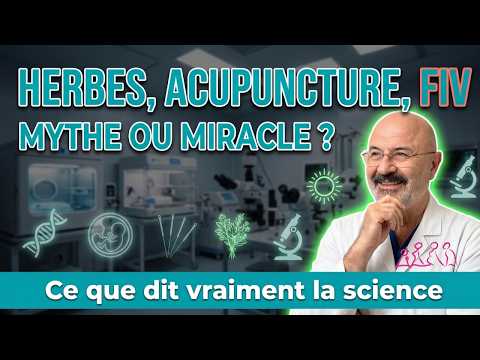
(Note: this video was recorded in French. English audio dubbing and subtitles are available — select your preferred audio track and subtitles in the YouTube player settings.)
What does the evidence say overall?
If we look at the full picture rather than individual anecdotes, the answer is mixed. Acupuncture has been studied far more than herbal remedies in IVF, but the strongest trials and professional guidance do not show a reliable increase in live-birth rates when acupuncture is performed around embryo transfer.
That does not mean every patient experience is imaginary. It means that a treatment can feel supportive without clearly changing the final reproductive outcome measured in high-quality IVF studies. This distinction is important, because many add-ons are marketed as if feeling better and improving birth rates were automatically the same thing.
Can acupuncture still be useful during IVF?
Possibly, yes, but usually as supportive care rather than as a proven success-rate booster. Some patients report feeling more relaxed, or describe a better subjective experience of stimulation, retrieval, and the wait after transfer. Those felt benefits can matter in a demanding cycle, but their size and specificity remain uncertain, and they do not by themselves demonstrate an improvement in IVF outcomes.
The more careful question is not “does anyone feel better?” but “does it improve the chance of a baby at home?” On that question, the evidence is much less convincing. The large randomized trial published in JAMA in 2018 found live-birth rates of 18.3% with acupuncture versus 17.8% with sham acupuncture — a non-significant difference — in women undergoing IVF. A 2021 meta-analysis of sham-controlled trials reached the same conclusion, with no significant live-birth difference (RR 0.87, 95% CI 0.75–1.01).
ASRM guidance on embryo transfer preparation likewise concludes that acupuncture around transfer does not improve live-birth rates. The ESHRE 2023 good-practice recommendations go further: they classify acupuncture, Chinese and herbal medicine as not recommended for improving ART outcomes, citing conflicting live-birth evidence and limited safety data. That does not forbid a personal choice made for comfort, but it should not be presented as a treatment of proven reproductive efficacy.
One recent analysis points the other way, and it deserves a fair hearing. A 2025 meta-analysis of East Asian traditional medicine (Peng X et al., 37 RCTs, 10,776 women) reports higher live-birth and clinical-pregnancy rates with acupuncture, and a smaller signal for herbal medicine, in ART.
However, its clinical interpretation requires caution. The meta-analysis pools very different forms of acupuncture, non-standardized herbal preparations, and heterogeneous control groups; statistical heterogeneity is high for several outcomes; the herbal live-birth result rests on only three trials; and its literature search ends in March 2023. Those results must be weighed against the sham-controlled trials, the ESHRE recommendation, and the trustworthiness-filtered 2026 review below.
The 2026 review is a recent synthesis that applied a formal trustworthiness assessment to IVF add-on trials. A systematic review and meta-analysis (Lensen et al.) assessed trials of ten common add-ons. After excluding trials with serious integrity concerns, it did not establish that acupuncture improves live birth or other clinically important IVF outcomes. This reinforces the cautious reading rather than overturning it.
Acupuncture is not risk-free. Transient pain, small bleeding, bruising, dizziness, or feeling faint can occur. Infectious or traumatic complications are rare when sterile equipment is used and the practitioner is properly trained. Tell the practitioner about a possible pregnancy, anticoagulant use, or any increased bleeding risk.
So my practical view is simple: if acupuncture helps you cope, it may have a place. But it should not be sold to you as established evidence for higher IVF success.
What about herbs and fertility plants?
This is where we need to be even more careful. Herbal medicine is often discussed as if it were one single treatment, but in reality it covers many different products, doses, combinations, and manufacturing standards. That makes the evidence harder to interpret and the safety profile less predictable.
Some meta-analyses — including the same 2025 East Asian traditional-medicine review — report possible benefit for herbal formulas in selected ART settings. However, formulas differ widely, study quality is uneven, and products are not standardized across clinics or countries.
More importantly, “natural” does not automatically mean safe in an IVF cycle. Depending on the plant, the dose, and the preparation, some products can affect clotting, interact with prescription medication, alter liver enzymes, or expose you to contaminants. The US FDA similarly warns that dietary supplements can interact with medications and surgical procedures, and that some may need to be stopped weeks before a procedure.
For that reason, do not start a herb, a concentrated tea, an extract, or a supplement during IVF without discussing it in advance with the team prescribing your treatment. A mild herbal tea and a concentrated extract are not the same exposure, and that difference matters.
Why can herbs be risky before retrieval or transfer?
Because IVF is a tightly timed medical process. During ovarian stimulation, egg retrieval, embryo transfer, and the luteal phase, we try to keep variables controlled. An herbal product with uncertain ingredients, uncertain dosing, or unpredictable pharmacological actions can complicate that picture.
“Natural” does not mean safe or biologically inert. Depending on the product, dose, and preparation, some herbal products may affect liver enzymes, blood pressure, heart rhythm, or blood glucose, increase bleeding risk, or interact with medicines. Products containing St. John’s wort, ginkgo biloba, ginseng, concentrated ginger or turmeric, garlic extracts, kava, or valerian need particular caution because their effects vary by preparation and dose. Some preparations can affect cytochrome P450 enzymes or platelet function, which may matter around sedation or anaesthesia.
Perioperative reviews and anaesthesia guidance may recommend stopping some herbal and dietary supplements before elective procedures. The timing depends on the product, dose, procedure, and instructions from the fertility and anaesthesia teams.
Key clinical concerns include:
- Medication interactions: possible interactions with fertility medicines, hormonal supplements, or anaesthetic agents; the exact risk depends on the product and dose
- Bleeding and haematoma risks: antiplatelet effects during transvaginal oocyte retrieval
- Sedation and cardiovascular effects: unintended interactions with intravenous sedation during egg collection
- Manufacturing inconsistency: risk of unlisted adulterants, heavy metals, or variable active concentrations
- Safety in early pregnancy: lack of toxicological safety data during peri-implantation and organogenesis
Patients sometimes assume that over-the-counter supplements or herbal blends are too mild to matter. In practice, some can still matter. Prescribed essentials such as folic acid, or vitamin D when specifically indicated, should be continued according to your fertility team’s instructions. Unvetted botanical blends, however, carry poorly characterised risks.
When might supportive complementary care still be reasonable?
It can be reasonable when the goal is clearly defined and realistic. For example, some patients want a non-drug way to support relaxation, sleep, or general well-being while they continue evidence-based IVF care. In that context, acupuncture from a qualified practitioner may be a personal supportive choice.
But the boundaries matter:
- it should not replace indicated fertility treatment
- it should not delay testing or intervention
- it should not involve undisclosed herbs or supplements
- it should not be framed as a guaranteed implantation tool
Supportive care is most appropriate when it stays in a supporting role.
How should you discuss this with your IVF team?
Be specific. Instead of saying “I’m taking something natural,” bring the exact names, photos of the boxes, full ingredient labels, and doses. If you are considering acupuncture, mention when sessions are planned and whether the practitioner also recommends herbs, teas, tinctures, or supplements.
Before starting ovarian stimulation—and certainly before egg retrieval and anaesthesia—I ask every patient to provide a full inventory of everything they consume, including herbal teas. Do not start any new supplement without clearance from your fertility and anaesthesia teams. Many herbal products may need to be stopped before the procedure, but the exact timing depends on the product, dose, and procedure. In fertility medicine, transparency is safer than improvisation.
What is my clinical approach?
In practice, I do not dismiss patients who want supportive therapies, but I do firmly protect them from exaggerated claims and hidden risks.
If acupuncture helps a patient feel calmer, improves sleep, or makes the demanding emotional burden of IVF easier to bear, I am not opposed to it as a supportive adjunct. However, I never present it as a proven medical method to improve egg quality, implantation, or live birth rates. Emotional relief is a genuine benefit, but claiming a biological boost in success rates is an entirely separate claim—one that current robust evidence does not support.
With herbal products, my stance is much more cautious. The goal of limiting unmonitored herbs is never to take away a patient’s feeling of personal agency, but to ensure that unproven substances do not compromise cycle safety or patient outcomes.
The right question is not whether a therapy sounds complete or natural. The right question is whether it is safe, proportionate, and honest about what it can and cannot do.
Related Reading
- IVF Protocols and Medications: How Doctors Choose a Plan
- Preparing the Endometrium for Frozen Embryo Transfer: HRT, Natural, and Hybrid Cycles
- Ways to Improve IVF Success: Evidence-Based Strategies
FAQ
Does acupuncture improve IVF success?
Not consistently in the outcomes that matter most. Some studies suggested benefit, but stronger evidence and guideline summaries do not show a reliable improvement in live-birth rates.
Can acupuncture help with IVF stress?
Some patients find the sessions calming, and that can be valuable during treatment. But evidence for effects on stress, sleep, or quality of life during IVF remains limited, and acupuncture does not clearly raise live-birth rates or other IVF outcomes.
Are herbal remedies safe during IVF?
Not automatically. “Natural” does not mean safe. Herbal remedies can alter liver enzymes, interact with stimulation drugs, increase bleeding risks, or complicate anaesthesia.
Should I stop all herbs before egg retrieval?
Not necessarily all of them. Many concentrated herbal products may need to be stopped before egg retrieval and anaesthesia, but the timing depends on the exact product, dose, procedure, and instructions of the fertility and anaesthesia teams. A mild herbal tea is not automatically the same exposure as a concentrated extract, but both should be disclosed. Do not stop prescribed essentials such as folic acid without checking with your team.
If something is natural, does that mean it is harmless?
No. Natural products contain active pharmacological compounds that can have biological side effects, contaminants, or dangerous drug interactions.
Can complementary care replace standard IVF treatment?
No. Complementary care should remain strictly supportive. It must never replace evidence-based diagnostics, medications, embryology laboratory procedures, or indicated clinical treatments.
Clinical Note
Over the years, I have seen many IVF patients look for something extra they can actively do during treatment. That wish is entirely understandable. My advice is to separate emotional support and stress management from claims about proven biological success. If a complementary method helps you feel steadier and does not interfere with treatment, we can integrate it thoughtfully. But I do not want patients spending time, hope, or money on promises that are stronger than the evidence—nor risking their safety with unvetted herbal preparations.
Dr. Senai Aksoy
Sources
- Lensen S, Wilkinson J, Steeper M, et al. Safety and effectiveness of ten common in-vitro fertilisation add-ons: a systematic review and meta-analysis. The Lancet Obstetrics, Gynaecology, & Women’s Health. 2026.
- ESHRE Add-ons Working Group. Good practice recommendations on add-ons in reproductive medicine. Human Reproduction. 2023;38(11):2062–2104.
- Smith CA, de Lacey S, Chapman M, et al. Effect of Acupuncture vs Sham Acupuncture on Live Births Among Women Undergoing In Vitro Fertilization: A Randomized Clinical Trial. JAMA. 2018;319(19):1990–1998. PubMed
- Coyle ME, Smith CA, Peat B. Acupuncture versus placebo acupuncture for in vitro fertilisation: a systematic review and meta-analysis. Acupuncture in Medicine. 2021;39(1):20–29. PubMed
- American Society for Reproductive Medicine. Performing the embryo transfer: a guideline. Summary statement on acupuncture and live-birth rates. ASRM
- Elvir Lazo OL, White PF, Lee C, et al. Use of herbal medication in the perioperative period: Potential adverse drug interactions. Journal of Clinical Anesthesia. 2024;95:111473. DOI: 10.1016/j.jclinane.2024.111473.
- Cheong YC, Dix S, Hung Yu Ng E, Ledger WL, Farquhar C. Acupuncture and assisted reproductive technology. Cochrane Database Syst Rev. 2013;CD006920.pub3. DOI: 10.1002/14651858.CD006920.pub3. PMC
- Peng X, et al. Integrating Acupuncture and Herbal Medicine into Assisted Reproductive Technology: A Systematic Review and Meta-Analysis of East Asian Traditional Medicine. Healthcare. 2025;13(11):1326. DOI: 10.3390/healthcare13111326. PubMed
- US Food and Drug Administration. Mixing Medications and Dietary Supplements Can Endanger Your Health. FDA
Add as a Preferred Source on Google
You can add draksoyivf.com as one of your preferred health information sources on Google.

The content has been created by Dr. Senai Aksoy and medically approved.