
Hysteroscopy in Female Infertility: Indications, Procedures, and Clinical Evidence

Key Takeaways
Hysteroscopy provides direct visual inspection and immediate surgical treatment for uterine abnormalities affecting fertility, including polyps, submucosal fibroids, adhesions, and septa. While non-invasive ultrasound remains the starting point, hysteroscopy is the definitive reference standard whenever cavity defects, recurrent implantation failure, or uterine symptoms require precise evaluation.
Key evidence: ACOG Committee Opinion on Hysteroscopy and Intrauterine Pathology ASRM Committee Opinion on Evaluation of Infertile Women ASRM Committee Opinion on Recurrent Implantation Failure
On this page
- What is Hysteroscopy?
- Video: Clinical Insights from Dr. Senai Aksoy
- Diagnostic vs. Operative Hysteroscopy
- Which Uterine Conditions Can Be Identified and Treated?
- Hysteroscopy Compared to Ultrasound, SIS, and HSG
- When is Hysteroscopy Recommended in Infertility?
- Procedure Steps, Comfort, and Recovery
- FAQ
- Sources
What is Hysteroscopy?
Hysteroscopy is a minimally invasive endoscopic procedure that allows direct, magnified visualization of the endocervical canal and the uterine cavity.
By passing a slender optical instrument (a hysteroscope) through the natural opening of the cervix, clinicians can examine the endometrium in real time without making abdominal incisions.
In reproductive medicine, evaluating the uterine cavity is fundamental. An anatomical or mucosal defect can hinder embryo implantation, impair placental vascularization, or increase early pregnancy loss.
These defects include structural abnormalities visible during direct inspection, which makes hysteroscopy a key reference standard when imaging is inconclusive.
Dr. Aksoy’s Approach
A normal ultrasound does not fully exclude intrauterine adhesions. The history that most changes my decision is reduced menstrual flow, or amenorrhoea, after curettage, a postpartum procedure, or infection. In that setting, hysteroscopy confirms the diagnosis and allows treatment in the same session. I may also reassess the cavity after repeated unsuccessful transfers of euploid or good-quality embryos. However, I do not recommend routine hysteroscopy before a first transfer when the patient is asymptomatic and imaging is normal. This selective approach aligns with the 2026 ASRM committee opinion.
Video: Clinical Insights from Dr. Senai Aksoy
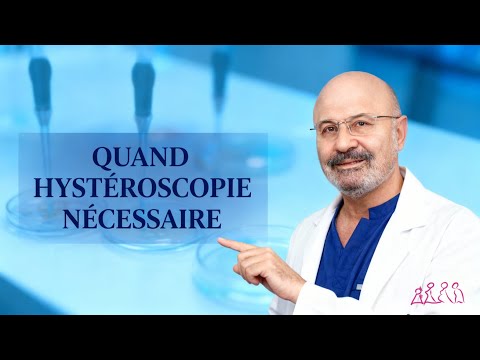
The video is in French. Subtitle and audio availability depends on the options currently provided by YouTube.
Diagnostic vs. Operative Hysteroscopy
Hysteroscopy serves two primary functions, often combined into a single outpatient visit:
- Diagnostic hysteroscopy: Used to inspect the shape of the cavity, the endometrium and the tubal openings. Small-calibre scopes and a vaginoscopic approach can reduce discomfort, although individual experience varies.
- Operative Hysteroscopy: Utilizes specialized micro-instruments, bipolar electrodes, or mechanical morcellators passed through the hysteroscope channel to remove or repair identified lesions under direct visualization.
Which Uterine Conditions Can Be Identified and Treated?
Hysteroscopy is the definitive method for diagnosing and treating many intrauterine abnormalities (ACOG Committee Opinion No. 800):
- Endometrial polyps: Localised growths of the uterine lining. Their relevance depends on size, location, symptoms and treatment context; evidence that removal improves IVF outcomes remains limited.
- Submucosal fibroids (FIGO types 0, 1 and 2): Fibroids that project into or distort the cavity. Hysteroscopic myomectomy can restore the cavity, but the expected fertility benefit depends on the lesion and the patient’s wider clinical picture.
- Intrauterine Adhesions (Asherman Syndrome): Fibrous scar bands formed following curettage, infection, or postpartum procedures. Hysteroscopic adhesiolysis restores cavity volume and functional endometrial surface area.
- Uterine septum: Hysteroscopic incision may be offered after recurrent miscarriage through shared decision-making. In infertility alone, the effect on live birth remains uncertain (ASRM uterine septum guideline, 2024).
- Chronic endometritis: Hysteroscopic appearances may raise suspicion, but diagnosis generally requires endometrial sampling and pathology rather than visual inspection alone.
Hysteroscopy Compared to Ultrasound, SIS, and HSG
Evaluating the uterine cavity typically involves several complementary diagnostic tools (ASRM Committee Opinion, 2021):
| Modality | Diagnostic Role | Sensitivity for Cavity Lesions | Can Treat Lesions? | Invasiveness |
|---|---|---|---|---|
| Transvaginal 2D/3D ultrasound | First-line assessment of the uterus, ovaries and endometrium | Performance varies by lesion and technique | No | Non-invasive |
| Saline infusion sonography (SIS) | Defines the cavity more clearly after saline distension | High predictive value for many cavity lesions | No | Minimally invasive |
| Hysterosalpingography (HSG) | Assesses tubal patency and the cavity outline | Limited for polyps and submucosal fibroids | No | Uses X-rays and transcervical contrast |
| Hysteroscopy | Direct inspection, targeted biopsy and selected treatment | Definitive test for intrauterine pathology | Sometimes | Endoscopic procedure |
When is Hysteroscopy Recommended in Infertility?
Hysteroscopy is most beneficial when targeted to specific clinical scenarios (Vitale et al., 2023):
- Suspicion of intracavitary pathology identified during transvaginal 2D/3D ultrasound or SIS.
- Repeated unsuccessful embryo transfers, when the history and previous assessment leave a meaningful concern about the cavity. There is no universal transfer-count threshold that automatically requires hysteroscopy.
- Recurrent Pregnancy Loss (RPL) to exclude congenital septa, submucosal myomas, or cervical insufficiency.
- History of uterine instrumentation, postpartum curettage, or severe pelvic inflammatory disease with hypomenorrhea (suggesting Asherman syndrome).
- Unexplained abnormal uterine bleeding (AUB) or persistent intermenstrual spotting during fertility evaluation.
Procedure Steps, Comfort, and Recovery
- Timing: When the patient is menstruating, hysteroscopy is commonly scheduled after bleeding has ended and before ovulation, when the lining is relatively thin. Timing is individualised for irregular cycles, urgent bleeding or hormonal treatment.
- Anesthesia & Setting: Diagnostic procedures and minor operative treatments (e.g., small polypectomy) are routinely performed in-office using vaginoscopy without general anesthesia. Complex myomectomies or extensive adhesiolysis are performed under mild sedation or general anesthesia.
- Recovery: Most women experience mild menstrual-like cramping and minimal spotting for 24 to 48 hours and resume normal daily activities within 24 hours.
FAQ
Is hysteroscopy always painful?
Experience varies. Some patients report mild cramping, while others find office hysteroscopy painful. The team should discuss pain-control options in advance; medication is not appropriate for everyone.
How soon after hysteroscopy can I attempt pregnancy or start IVF?
After an uncomplicated diagnostic procedure, treatment can often continue without a long delay. The interval after polypectomy, myomectomy, adhesiolysis or septum surgery depends on the extent of treatment and the clinician’s review of healing.
Does removing a polyp improve IVF success rates?
Not with certainty. Removing a clinically relevant polyp may be reasonable, but evidence for improved IVF outcomes is limited. The clearest randomised evidence concerns pregnancy before intrauterine insemination rather than IVF (Cochrane review).
Can hysteroscopy diagnose blocked fallopian tubes?
Hysteroscopy visualizes the tubal openings (ostia) inside the uterus, but it does not assess full tubal length or distal patency. Tubal patency is evaluated via HSG or laparoscopy with chromopertubation.
Related Reading
- Hysteroscopy Before IVF: Necessity and Clinical Recommendations
- Who Needs Hysteroscopy? Clinical Indications and Candidate Profiles
- Chronic Endometritis and IVF: Diagnosis, Impact, and Treatment
- Hysteroscopic Cytoreductive Surgery for Adenomyosis
Sources
- American College of Obstetricians and Gynecologists (ACOG). The Use of Hysteroscopy for the Diagnosis and Treatment of Intrauterine Pathology: ACOG Committee Opinion No. 800. Obstet Gynecol. 2020;135(3):e138-e148.
- Practice Committee of the American Society for Reproductive Medicine. Fertility evaluation of infertile women: a committee opinion. Fertil Steril. 2021;116(5):1255-1265.
- Practice Committee of the American Society for Reproductive Medicine. Evidence-based diagnosis and treatment for uterine septum: a guideline. Fertil Steril. 2024;122:251-265.
- Practice Committee of the American Society for Reproductive Medicine. American Society for Reproductive Medicine recurrent implantation failure: a committee opinion. Fertil Steril. 2026.
- Vitale SG, et al. Efficacy of Hysteroscopy in Improving Fertility Outcomes in Women Undergoing Assisted Reproductive Technique: A Systematic Review and Meta-Analysis of Randomized Controlled Trials. J Clin Med. 2023;12(20):6687.
- Bosteels J, et al. Hysteroscopy for treating subfertility associated with intrauterine adhesions, endometrial polyps, submucous fibroids, or uterine septa. Cochrane Database Syst Rev. 2018;12(12):CD009461.
Add as a Preferred Source on Google
You can add draksoyivf.com as one of your preferred health information sources on Google.

The content has been created by Dr. Senai Aksoy and medically approved.