
Natural Pregnancy After IVF: Why Spontaneous Conception Still Happens

Key Takeaways
Natural conception can occur after IVF, but there is no single rate for everyone. A meta-analysis estimated natural-conception pregnancy in 20% of women after an ART live birth, while a separate cohort found treatment-independent live birth within five years in 17% after unsuccessful IVF/ICSI and 15% after an IVF/ICSI live birth; individual probability depends on age, diagnosis, time and whether conception is anatomically possible.
Key evidence: Thwaites et al. (2023) Systematic Review on Natural Conception Post-ART ElMokhallalati et al. (2019) Cohort Study on Post-IVF Live Births ASRM Practice Committee Opinion on Fertility Evaluation in Women
On this page
- Natural Conception After IVF
- Video: Clinical Insights from Dr. Senai Aksoy
- What Does the Scientific Evidence Show?
- Why Does Natural Conception Still Occur?
- Factors Associated With a Greater Likelihood of Natural Conception
- Practical Implications: Contraception vs. Family Planning
- FAQ
- Sources
Natural Conception After IVF
A common misconception among fertility patients is that undergoing in vitro fertilization (IVF) implies an absolute, permanent inability to conceive naturally. In reality, reproductive medicine views infertility not as an absolute binary (fertile versus sterile), but as a broad spectrum of subfertility.
Many couples requiring IVF have reduced monthly fecundability (a lower chance of conceiving in any given cycle) rather than an insurmountable anatomical barrier. Consequently, natural conception remains possible after IVF treatment—whether that treatment resulted in a live birth or concluded without pregnancy.
Video: Clinical Insights from Dr. Senai Aksoy
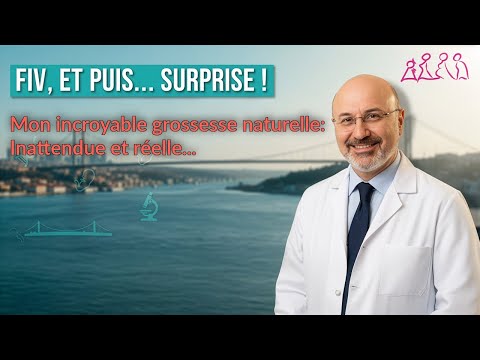
(Note: The video is presented in French with multilingual subtitles and multi-track audio options available in the video player settings).
What Does the Scientific Evidence Show?
Epidemiological studies and systematic reviews have estimated how often treatment-independent pregnancies occur following assisted reproductive technology (ART):
- After an ART live birth: A systematic review and meta-analysis in Human Reproduction (Thwaites et al., 2023) included 5,180 women from 11 studies. Its pooled estimate was 20% (95% CI 17–22%) for natural-conception pregnancy after an ART live birth. Follow-up and study methods varied substantially; the estimate at three years was 18%.
- After successful or unsuccessful IVF/ICSI: A single-centre Scottish cohort of 2,133 women (ElMokhallalati et al., 2019) measured treatment-independent live birth, not pregnancy. Within five years, the rate was 17% after unsuccessful treatment and 15% after an IVF/ICSI live birth.
The two studies answer different questions and should not be collapsed into one universal percentage. They show that treatment-independent conception or live birth is possible in selected populations, not that every person has a 15–20% individual chance.
Why Does Natural Conception Still Occur?
IVF is used for many different diagnoses. In some, such as unexplained infertility or less severe male-factor infertility, the monthly chance of conception may be reduced rather than absent. In others, an anatomical or biological barrier makes unassisted conception extremely unlikely or impossible.
The Scottish cohort found higher treatment-independent live-birth rates with younger age and shorter infertility duration. Tubal-factor infertility was associated with a lower rate after unsuccessful treatment. These are group-level associations; they cannot predict an individual pregnancy without reviewing the original diagnosis and current circumstances.
Factors Associated With a Greater Likelihood of Natural Conception
The original diagnosis determines whether unassisted conception remains biologically possible. Age and infertility duration also influence probability. The ASRM fertility-evaluation guidance supports assessing ovulation, tubal patency and the male partner rather than inferring current fertility from IVF history alone.
| Factor | What may leave a possibility | What substantially limits or prevents it |
|---|---|---|
| Age and duration | Younger age and shorter infertility duration were associated with higher rates in the cohort | Probability generally declines with age and longer infertility duration; neither creates an absolute cut-off |
| Tubal status | At least one patent, functional tube | Confirmed bilateral tubal removal or complete bilateral occlusion prevents unassisted fertilisation |
| Male factor | Sperm present in the ejaculate may leave some possibility, depending on number and motility | Absence of sperm in the ejaculate prevents unassisted fertilisation |
| Original diagnosis | Unexplained infertility or some ovulatory disorders may leave a non-zero chance | The specific diagnosis may require treatment; it must be reassessed rather than assumed from this table |
Practical Implications: Contraception vs. Family Planning
This distinction matters in two practical situations:
- For couples wanting another child: The choice between trying without treatment and using stored embryos should be individualised. Age, the original diagnosis, embryo availability, time since treatment and family priorities all matter; the studies above do not establish a routine 6- or 12-month waiting period.
- For couples not wanting another pregnancy: Previous infertility should not be treated as contraception when unassisted conception remains possible. A clinician can help choose a method suited to postpartum status, medical history and preferences.
FAQ
Does a natural pregnancy after IVF mean the original diagnosis was incorrect?
No. It means the original condition may have reduced the chance of conception without making it impossible. A later natural pregnancy does not invalidate the earlier diagnosis.
Does IVF “cure” infertility for future pregnancies?
No. IVF does not by itself remove the original cause of infertility. A later natural conception may reflect a diagnosis in which the probability was reduced rather than zero, or a change in relevant clinical circumstances.
Can women with blocked tubes get pregnant naturally after IVF?
If both tubes have been removed or complete bilateral occlusion is confirmed, sperm and egg cannot meet without treatment. Because an HSG can sometimes suggest occlusion when tubal spasm is present, the meaning of a previous result should be reviewed with a fertility specialist rather than assumed.
When should I consult a doctor if I suspect a spontaneous pregnancy?
If you miss a period or have a positive home test, contact your clinician. Depending on your history, they may recommend a quantitative serum beta-hCG test and an early transvaginal ultrasound to assess the pregnancy’s location and development.
Related Reading
- Can IVF Babies Be Delivered Naturally? Modes of Delivery and Safety
- Unexplained Infertility: Diagnostic Evaluation and Treatment Strategies
- PCOS and Fertility: Ovulation, Egg Quality, and Management
- Cumulative IVF Success Rates Over Multiple Cycles
Sources
- Thwaites A, et al. How common is natural conception in women who have had a livebirth via assisted reproductive technology? Systematic review and meta-analysis. Hum Reprod. 2023;38(8):1590-1600.
- ElMokhallalati Y, et al. Treatment-independent live birth after in-vitro fertilisation: a retrospective cohort study. Hum Reprod. 2019;34(8):1470-1478.
- Practice Committee of the American Society for Reproductive Medicine. Fertility evaluation of infertile women: a committee opinion. Fertil Steril. 2021;116(5):1255-1265.
Add as a Preferred Source on Google
You can add draksoyivf.com as one of your preferred health information sources on Google.

The content has been created by Dr. Senai Aksoy and medically approved.